If you've ever ordered "Japanese green tea" anywhere outside Japan, there's a good chance what you got was sencha. Sencha is the everyday, unshaded green tea that makes up about three-quarters of all tea grown in Japan — grassy, a little sweet, and the cup most Japanese households actually drink, not the one saved for special occasions.
This guide covers what sencha actually is, how it differs from the other Japanese teas you'll see on this site, and how to brew it so it doesn't come out bitter.
What Sencha Actually Is
Sencha is green tea made from leaves that grow in full sunlight, then steamed shortly after picking to stop oxidation.
That steaming step is what separates Japanese green tea from Chinese green tea, which is usually pan-fired instead. Steaming locks in a brighter green color and a grassier, more vegetal flavor — it's the reason sencha tastes noticeably different from the green tea you might already know.
After steaming, the leaves are rolled into thin needle shapes and dried. That shape is also part of what tells you it's sencha before you even taste it — tightly rolled, dark green needles, not powder, not loose curls.
Sencha vs. the Other Japanese Teas
The easiest way to place sencha is next to the teas it's most often confused with.
| Tea | Grown in sun or shade? | Processing | Flavor |
|---|---|---|---|
| Sencha | Full sun | Steamed, rolled | Grassy, lightly sweet, some astringency |
| Matcha | Shaded before harvest | Steamed, dried, stone-ground into powder | Rich, umami-heavy, whisked not steeped |
| Gyokuro | Shaded before harvest | Steamed, rolled (like sencha) | Sweeter, less bitter, more umami than sencha |
| Hojicha | Full sun | Roasted after steaming | Toasty, low caffeine, no bitterness |
In short: sencha is the un-shaded, un-powdered, un-roasted baseline that the other teas are variations on. If you're only going to learn one Japanese tea first, this is the one — everything else makes more sense once you know how sencha works.
Why Sencha Tastes Bitter (and How to Fix It)
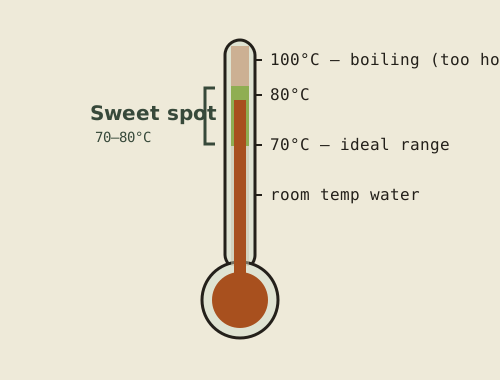
If you've had sencha and found it bitter, the tea probably isn't the problem — the water was.
Sencha is far more sensitive to water temperature than black tea or coffee. Boiling water pulls out excess tannins and catechins, which is exactly what reads as bitterness. Most beginners brew sencha the way they'd brew any other tea — straight off the boil — and that's the single most common mistake.
Here's the fix:
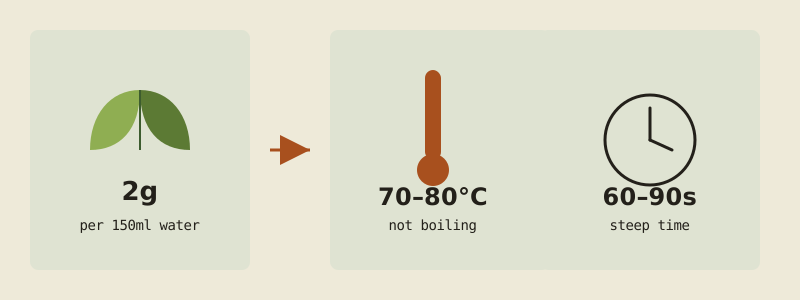
- Use water around 70–80°C (160–175°F), not boiling
- Steep for 60–90 seconds, not the 3–5 minutes you'd use for black tea
- Use slightly more leaf than you'd expect (about 2g per 150ml of water) to compensate for the lower temperature
If you don't have a thermometer, a rough trick works fine: boil the water, then let it sit for about 3–4 minutes before pouring. That's usually enough to drop it into range.
How to Brew Sencha, Step by Step
- Warm your teapot or cup with a splash of hot water, then discard it. This keeps the brewing temperature more stable.
- Add the leaves — about 2g (roughly one teaspoon) per 150ml of water.
- Pour water at 70–80°C, not boiling.
- Steep for 60–90 seconds. Don't walk away — sencha over-steeps fast.
- Pour completely. Leaving liquid sitting on the leaves makes the next infusion bitter. Get every drop out.
- Re-steep the same leaves once or twice more, adding about 15 seconds to each subsequent steep. Good sencha holds up for 2–3 infusions.
A kyusu (a Japanese side-handle teapot with a built-in mesh strainer) makes this easier because it's designed to drain fully without extra straining, but a regular teapot with an infuser basket works fine while you're starting out.
What to Look For When Buying Sencha
Since we haven't finished testing specific brands to recommend yet, here's what actually matters on the label so you can make a good choice yourself in the meantime:
- Harvest info: teas labeled ichibancha or "first flush" come from the first spring harvest and are generally the most prized — sweeter, less astringent
- Color: look for a vivid, deep green, not olive or brownish, which suggests older or lower-grade leaf
- Origin: Shizuoka and Kagoshima are the two largest sencha-producing regions, and both are reliable starting points
- "Best by" date: loose-leaf sencha is best used within about 6 months of the roast or packaging date — it doesn't spoil, but it fades
We'll update this section with specific brand picks once we've actually tasted and compared them.
Common Questions
Is sencha the same as green tea? Sencha is a type of green tea, but not all green tea is sencha — it's the most common Japanese variety specifically, distinct from Chinese green teas and from other Japanese types like matcha or gyokuro.
Does sencha have less caffeine than coffee? Yes, generally. A cup of sencha typically has around 15–30mg of caffeine, compared to roughly 95mg in a cup of coffee — though this varies with steep time and leaf amount.
Can you drink sencha every day? Yes. It's the tea most Japanese households drink daily, not an occasional or ceremonial one.
Why does my sencha taste different each time I brew it? Water temperature and steep time make a bigger difference with sencha than with most teas — small variations in either will change the cup noticeably.
In Short
Sencha is Japan's everyday green tea: sun-grown, steamed, and rolled into thin needles. It's the tea to start with if you're new to Japanese tea, and almost every case of "bitter sencha" comes down to water that's too hot, not the tea itself. Get the temperature and timing right, and it's one of the easiest Japanese teas to enjoy from the first cup.